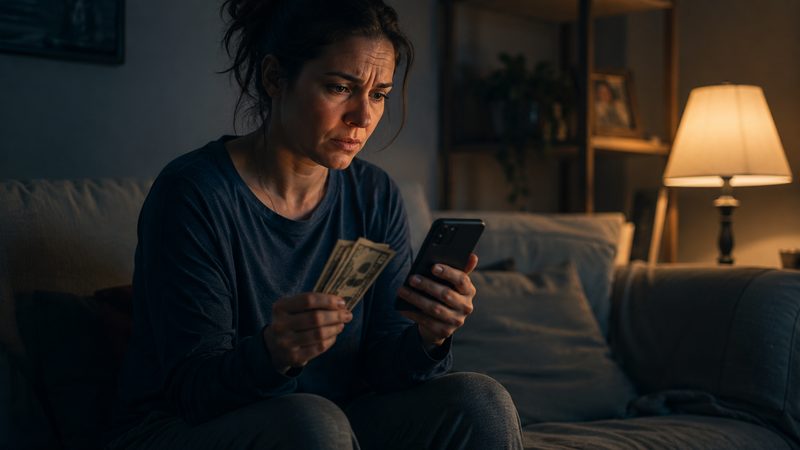
"They're tribal, so state rules don't apply — but I heard they're not enforceable in Washington either. What can they actually do to me if I fall behind?" That's a real question from a stressed Washington borrower, and it captures exactly why tribal payday loans are so confusing — and so risky.
Tribal lenders are among the most-complained-about lenders in Washington. This guide explains what they are, why they're dangerous, how sovereign immunity actually works, and what protection you have under Washington law.
Tribal payday lenders are owned by federally recognized tribes and claim "sovereign immunity" from state law. In Washington, they are not licensed or regulated by the DFI, and state agencies generally can't help with complaints about them. But here's the key protection: if the lender isn't licensed in WA — and many aren't — the loan is uncollectible and unenforceable under RCW 31.45.105. The catch: if you gave them access to your bank account, they may keep withdrawing anyway. Always check for a DFI license before borrowing.
What Are Tribal Payday Loans?
A tribal lender is an online lender owned by, or affiliated with, a federally recognized Native American tribe. Because tribes are treated as sovereign nations within the United States, these lenders argue they're not subject to most state regulations — including the payday loan laws designed to protect consumers.
In practice, this means tribal lenders often charge interest and fees well above Washington's legal caps. Unlike a standard payday loan repaid in one lump sum, tribal loans are usually repaid in installments — often biweekly — which can stretch the high cost out over a longer period.
Some tribal lenders show a licensing certificate issued by a tribe. That document is not legally binding in Washington and does not substitute for a DFI license. The only license that protects you under Washington law is one you can verify in the DFI database.
Why They're Risky in Washington
The danger isn't just high rates. It's the combination of high cost and reduced protection:
| Risk | What it means for you |
|---|---|
| Not regulated by DFI | Washington agencies generally can't help with complaints |
| Rates above state caps | Interest and fees can far exceed WA's legal limits |
| Installment structure | High cost stretched over many biweekly payments |
| Bank account access | They may keep withdrawing even from an unenforceable loan |
| Unclear legal status | A "gray area" that's hard for regulators to shut down quickly |
| Collection via tribal courts | They may pursue you in a forum where state protections don't apply |
The Sovereign Immunity Myth
Here's the nuance most sites get wrong: tribal status does not automatically shield a lender from Washington law.
When a lender does business in Washington — targeting WA residents through a website and disbursing funds to WA bank accounts — the DFI can treat the transaction as a Washington-based payday loan, subject to the state's caps and licensing requirements. Sovereign immunity is not an automatic get-out-of-jail card. In fact, in the well-known case Williams v. Big Picture Loans, a court found the lender had not established that it was entitled to tribal immunity. Fifteen state attorneys general have formally argued that payday lenders shouldn't be able to skirt state consumer-protection laws by forming "loose and questionable affiliations" with tribes.
According to the CFPB Consumer Complaint Database, tribal lenders are among the most-complained-about lenders in Washington — and Big Picture Loans tops the list. If a lender's name shows up repeatedly in complaints and it isn't in the DFI database, treat that as a serious warning.
Your Protection: The License Check + RCW 31.45.105
Your strongest defense is simple and free: check for a DFI license before you borrow.
Under RCW 31.45.105, a small loan (up to $700) made by an unlicensed lender to a person physically located in Washington is uncollectible and unenforceable in the state. Since many tribal lenders are not licensed here, their loans often fall into exactly this category — meaning they can't win a judgment against you in Washington or garnish your wages.
Go to dfi.wa.gov, use "Verify a License," and search the lender's exact name. Or call 1-877-RING-DFI (746-4334). If the lender isn't listed, the loan is likely unenforceable in Washington. See our full guide: How to Spot an Unlicensed Payday Lender in WA.
The Catch: Bank Account Access
This is the part that traps people. As the DFI itself has warned, a loan being "uncollectable and unenforceable" doesn't help much if the unlicensed lender already has access to your bank account — because they can simply keep withdrawing payments directly.
So even when the law is on your side, a tribal lender with your account details can drain money before you can stop them. That's why the safest move is never to borrow from one in the first place — and if you already have, to act quickly on the bank side.
What to Do If You Already Took a Tribal Loan
- Verify the lender's license at dfi.wa.gov. If they're unlicensed, the loan is likely uncollectible in Washington under RCW 31.45.105.
- Contact your bank immediately. Ask about stopping automatic withdrawals (ACH) and, if needed, revoking authorization or closing/reopening the account. Because the lender may have your account details, this is the most urgent step.
- Document everything — the loan agreement, payment history, and all communications.
- File a complaint with the WA DFI (1-877-RING-DFI), the Washington Attorney General, and the CFPB at consumerfinance.gov.
- Get advice. Consider a nonprofit credit counselor or a Washington consumer-protection attorney, especially if the lender is pursuing you through a tribal court.
- Watch for identity-theft risk — you shared sensitive data with an unregulated lender. Monitor your accounts and credit reports.
Safer Alternatives
Before turning to a tribal lender for fast cash, consider options that keep you inside Washington's protections:
- Credit union PAL — a Payday Alternative Loan capped around 28% APR, versus tribal rates that can run far higher.
- Licensed WA payday lenders — verify at dfi.wa.gov; at least you keep the state's fee caps and rights.
- Employer paycheck advance — often free.
- Payment plan or extension — ask your existing creditor first; it may cost nothing.
FAQ
Official Sources
- WA DFI — Payday Loans (tribal lender caution): dfi.wa.gov/financial-education/information/payday-loans
- WA DFI — Verify a License: dfi.wa.gov · 1-877-RING-DFI (746-4334)
- RCW 31.45.105 — unlicensed small loans uncollectible in WA
- RCW 31.45.073 — definition of a "small loan" ($700 limit)
- Williams v. Big Picture Loans — tribal immunity not established
- CFPB Consumer Complaint Database: consumerfinance.gov · (855) 411-CFPB
- Washington State Attorney General — consumer complaints: atg.wa.gov
- Federal Trade Commission: ftc.gov · 1-877-FTC-HELP
Skip the gray area. Compare licensed Washington lenders that keep you protected.
Compare Lenders Now →